Best AI crypto trading bot: what to know before you buy
AI crypto trading bots promise to automate strategy and capture opportunities around the clock, but the market is crowded with products that don't deliver. Here's what to look for before you buy.

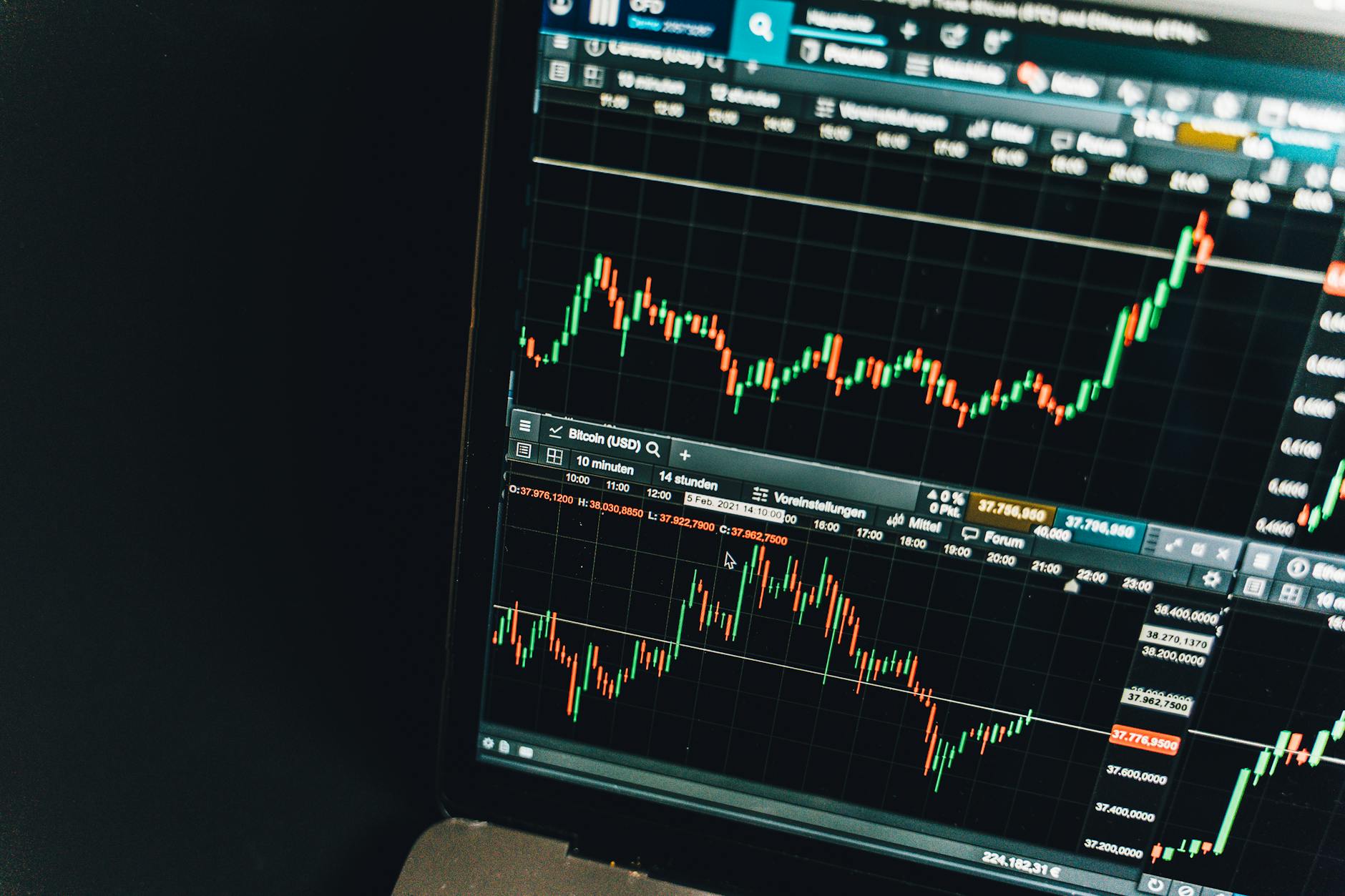
Photo by Alesia Kozik on Pexels
The best AI crypto trading bot doesn't sell itself on flashy screenshots. It earns its place through transparency about how it works, what it costs, and what happens when the market moves against it. For Australian traders, that evaluation matters more than ever: the crypto bot market grew significantly in 2024 and 2025, and the range of products now spans everything from basic grid tools to genuinely sophisticated machine-learning engines.
What an AI crypto trading bot actually does
A crypto trading bot is software that connects to an exchange via API and executes orders automatically according to a defined set of rules. The "AI" label gets applied liberally, but it generally means one of three things: the bot uses statistical models to identify patterns, it adjusts its parameters in response to changing market conditions, or it uses a form of reinforcement learning to optimise for a target metric like profit or drawdown reduction.
Not all bots described as AI are equal. Some are rule-based systems with a machine-learning layer bolted on for marketing purposes. Others, particularly those from specialist fintech developers, use genuine neural network architectures trained on multi-year datasets. The difference matters when volatility spikes.
Before committing to any platform, ask the vendor three direct questions. First, what model architecture underpins the AI component? Second, what historical period was the model trained on? Third, what is the live track record, not the backtested one?
Key features that separate good bots from bad ones
Strategy transparency is the most important feature. A bot that won't explain its logic in plain terms is a black box, and a black box is a liability. Reputable platforms publish their strategy documentation, allow users to inspect the parameters driving decisions, and separate AI-generated signals from execution mechanics.
Exchange compatibility is the second filter. Most serious bots connect to major centralised exchanges: Binance, Kraken, Coinbase Advanced, and OKX are common targets. Australian traders should confirm AUD support and check whether the exchange itself is registered with AUSTRAC, since your deposit sits on the exchange's infrastructure, not the bot provider's.
Risk controls matter as much as returns. A well-built bot includes stop-loss logic, maximum drawdown limits, and position-sizing rules that the user can configure. Bots that chase returns without hard risk limits can compound losses faster than any human trader would allow.
Fee structures are frequently obscured. Most bot platforms charge one or more of: a monthly subscription, a performance fee (typically 10 to 30 per cent of profits), or a per-trade commission. Calculate all three against a realistic expected return before committing.
Popular platforms worth evaluating
Several platforms have built meaningful reputations since 2022. 3Commas is widely used for its DCA (dollar-cost averaging) and grid bots, and its interface is accessible enough for traders who aren't developers. Pionex is notable for offering built-in free bots funded through its own exchange spread, which removes the subscription cost but ties you to a single venue. Cryptohopper offers a marketplace of community-built strategies and a visual strategy editor. For traders comfortable with code, Hummingbot is an open-source framework that gives full control over strategy logic and execution.
None of these platforms guarantees profit. Every one of them has produced losses for users who deployed strategies without understanding their assumptions. That disclaimer isn't boilerplate; it's the single most important fact about this product category.
Australian regulatory context
Using an AI crypto trading bot in Australia sits in a regulatory grey zone. The bot itself isn't licensed as a financial product, and most providers are offshore. However, any profits generated are subject to Australian tax law: the ATO treats cryptocurrency trading gains as either capital gains or ordinary income depending on the frequency and intent of trading activity. Automated bots typically generate high trade volumes, which can shift the tax treatment toward income rather than capital gains.
If you're learning crypto trading and considering automation as a next step, it's worth understanding your manual strategy first. Bots amplify whatever logic they're given. A flawed strategy executed at machine speed loses money faster than one executed by hand.
The Australian Securities and Investments Commission (ASIC) has noted that algorithmic trading tools targeting retail investors can carry significant risk, particularly where performance claims aren't independently verified. ASIC's guidance recommends treating any tool that promises consistent returns with scepticism.
How to assess a bot's claimed performance
Backtested returns are almost always better than live returns. Backtesting runs a strategy against historical data with the benefit of hindsight, and even small look-ahead biases in the data can produce results that look exceptional on paper but collapse in live conditions.
Ask for audited live performance data covering at least 12 months. Check whether the reported period includes a significant drawdown event, such as the crypto market correction of 2022 or the volatility periods of 2024. A bot that has only been live during a bull run hasn't been stress-tested.
Independent verification matters. Platforms that publish performance through a third-party auditor carry more credibility than those that self-report. Some platforms connect directly to exchanges via read-only API and display live account performance, which is more reliable than screenshots.
Choosing a bot that fits your situation
Your choice depends on three variables: capital size, technical comfort, and available time. If you have under $5,000 to deploy, subscription fees will eat a disproportionate share of any return. In that range, a free built-in bot on a compatible exchange is more economical than a premium platform.
For traders who want to understand what drives crypto markets before automating, a plain-language guide to crypto trading is a better starting point than any bot. Automation works best as an extension of a strategy you already trust, not a substitute for understanding the market.
If you have programming experience, open-source frameworks give you the most control and the lowest ongoing cost. If you don't, a hosted platform with a clear interface and documented strategy logic is safer than a custom-coded solution you can't maintain or audit.
Start with paper trading (simulated execution without real funds) for at least 30 days before committing capital. Most reputable platforms offer this. The 30-day window won't capture every market condition, but it will reveal whether the bot's behaviour matches the vendor's description.