Crypto margin trading in Australia: what the rules actually mean
Crypto margin trading in Australia sits at the intersection of ASIC licensing rules and ATO tax obligations that most retail traders don't fully understand. Here's what the framework actually requires.

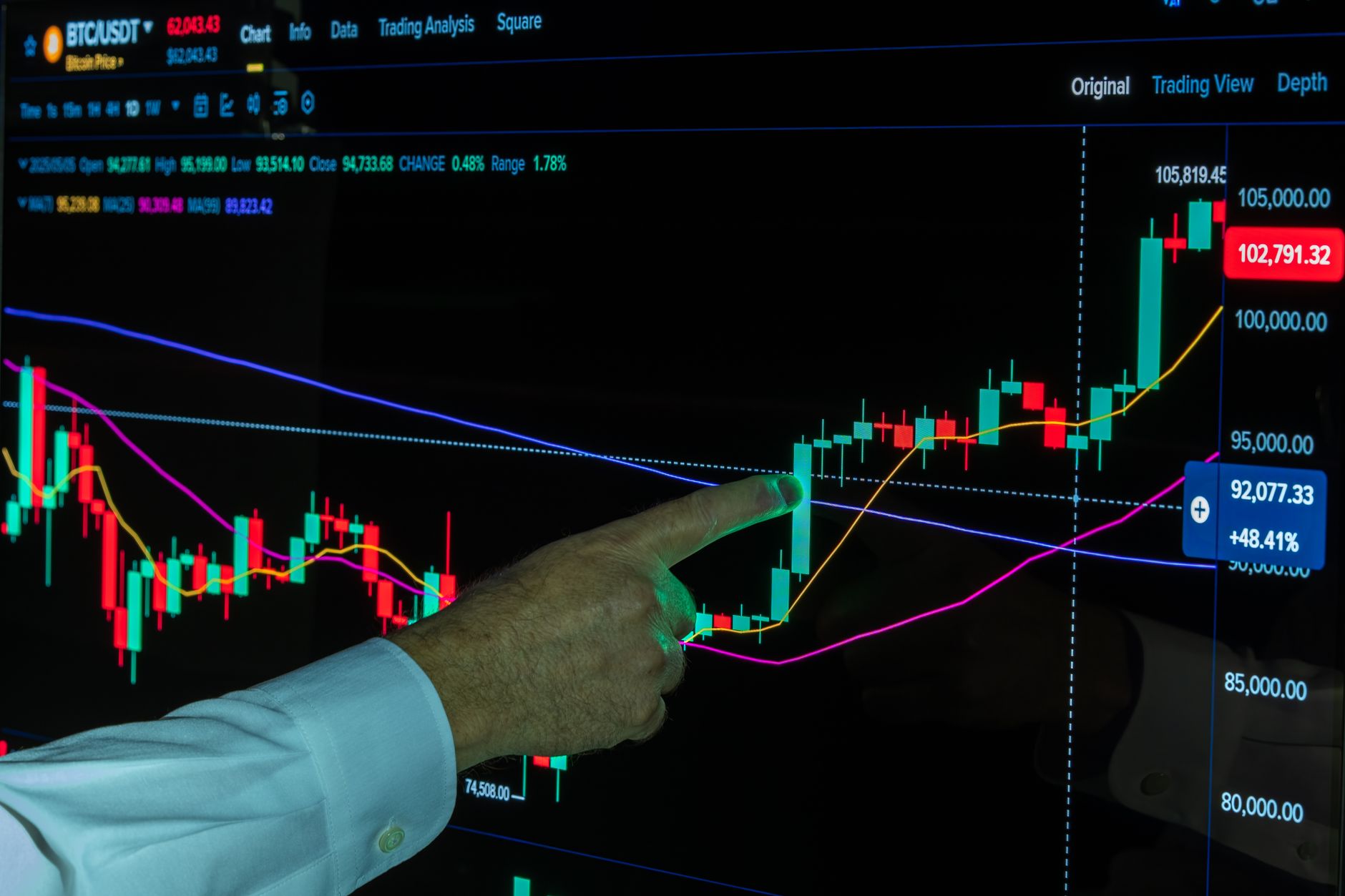
Photo by Rafael Minguet Delgado on Pexels
Crypto margin trading lets investors control a position larger than their deposited capital by borrowing funds from an exchange or broker. In Australia, that activity sits across at least three regulatory frameworks simultaneously: ASIC's financial services licensing regime, the Australian Taxation Office's treatment of leveraged crypto positions, and the anti-money laundering obligations that apply to the platforms offering the product. Most retail traders focus on the leverage ratio. Regulators focus on everything else.
How margin trading works in crypto
When a trader opens a leveraged position, the exchange effectively lends funds to amplify both potential gains and losses. A 5x leveraged long on Bitcoin means a 10% price increase produces a 50% gain on the deposited margin. It also means a 10% decline triggers a 50% loss, and a 20% decline wipes the position entirely through liquidation. The deposited margin acts as collateral. If the position moves against the trader beyond a set threshold, the exchange closes it automatically without notice.
Products vary. Some platforms offer perpetual futures contracts, which have no expiry date and use a funding rate mechanism to keep contract prices anchored to spot. Others offer dated futures, options, or tokenised leveraged products. Each carries different tax treatment under Australian law, which is a distinction the ATO is increasingly focused on.
ASIC's position on leveraged crypto products
ASIC classifies many leveraged crypto derivatives as financial products under the Corporations Act 2001. Platforms offering contracts for difference (CFDs) on crypto assets to Australian retail clients must hold an Australian Financial Services Licence. ASIC has pursued enforcement action against offshore platforms that marketed leveraged crypto products to Australians without holding the appropriate licence.
The regulator issued a product intervention order in 2021 limiting the maximum leverage CFD providers can offer retail clients to 2:1 on crypto assets. That limit remains in effect. It's the tightest leverage cap in the CFD product intervention framework, sitting well below the ratios applied to forex (30:1) or equity indices (20:1). ASIC's reasoning was explicit: crypto's volatility profile creates losses that arrive faster and at larger magnitudes than other asset classes.
Platforms incorporated offshore that serve Australian clients without ASIC authorisation operate outside this cap. Some Australian traders deliberately use those platforms for higher leverage. ASIC can't directly regulate a Seychelles-incorporated exchange, but it can pursue Australian-based intermediaries who refer clients to them, and it can issue public warnings that affect those platforms' reputations domestically.
How the ATO taxes margin trading gains and losses
The tax treatment of leveraged crypto positions depends on whether the trader is classified as an investor or as someone carrying on a business of trading. The ATO's distinction matters more than most people realise. It's not just about frequency of trades.
For investors, profits from closing a leveraged crypto position are typically treated as a capital gain. The 50% CGT discount applies if the underlying position was held for more than 12 months, though with short-dated derivatives that threshold is rarely met. Losses can be offset against other capital gains in the same year or carried forward. For a deeper look at how the CGT discount interacts with crypto holdings, the site's coverage of crypto capital gains tax and the 12-month discount rule sets out the mechanics in detail.
For traders operating at a business scale, profits are ordinary income. Losses are deductible against other income in the same year, which can be advantageous. The ATO looks at factors including the scale of activity, the systematic approach to trading, and whether the person holds themselves out as a trader. There's no bright line. A person making 200 leveraged trades per year on a structured strategy is more likely to be classified as a trader than someone making 20 speculative positions.
Funding rate payments on perpetual futures are another source of confusion. When a trader holds a long perpetual position and pays a funding rate to short holders, the ATO treats those payments as a deductible expense. When a short position receives funding rate payments, those are assessable income. Most traders don't record these. The ATO's data-matching programme increasingly captures exchange transaction data, so the gap between what traders declare and what exchanges report is narrowing.
Liquidations and their tax consequences
A forced liquidation is a disposal event for tax purposes. The ATO treats it the same as a voluntary sale. If a 5x long Bitcoin position is liquidated at a loss, that loss is a capital loss (for investors) or a deductible business loss (for traders). The position size at entry, the liquidation price, and any fees charged by the exchange all need to be recorded.
This creates a documentation problem. Platforms don't always provide liquidation records in formats that integrate cleanly with Australian tax software. Traders are responsible for maintaining accurate records regardless of what the platform produces. If records are incomplete, the ATO can reconstruct income using the information it obtains from exchanges directly.
Platform due diligence for Australian traders
Before using a margin trading platform, Australian traders should check three things. First, whether the platform holds an AFS licence or operates under an exemption. Second, whether it's registered with AUSTRAC as a digital currency exchange, which is required for platforms that accept AUD deposits and withdrawals. Third, whether it offers adequate records for tax purposes, including trade history, funding rate payments, and liquidation events in exportable formats.
AUSTRAC registration covers anti-money laundering obligations. It's not a quality endorsement. A platform can be AUSTRAC-registered and still lack ASIC authorisation for the derivative products it offers. The two registers are separate and cover different obligations.
Understanding how platforms handle the tax record question is also useful context when thinking about crypto tax loss harvesting strategies, which depend on accurate records of every position opened and closed.
What offshore platforms don't tell you
Offshore platforms often market 100x leverage to Australian users. A few things don't appear in those marketing materials. If the platform isn't ASIC-licensed, Australian retail client protections don't apply. There's no compensation scheme if the exchange is hacked or becomes insolvent. Dispute resolution sits outside Australia's jurisdiction entirely. And the ATO still expects those offshore positions to be declared.
ASIC has issued specific warnings about a number of offshore leveraged crypto platforms targeting Australian retail clients, and the ASIC website maintains an updated list of unlicensed operators. Some of these platforms have accepted deposits from Australian clients and subsequently blocked withdrawals.
The leverage itself isn't the primary risk for most retail traders. It's the combination of leverage and operating through an unregulated counterparty with no recourse if things go wrong.
Key obligations in plain terms
- All leveraged crypto gains and losses must be reported to the ATO, including on offshore platforms.
- Funding rate payments received or paid on perpetual contracts are taxable income or deductible expenses respectively.
- Liquidation events are disposals and must be recorded with accurate entry and exit prices.
- Platforms offering crypto CFDs to Australian retail clients must hold an ASIC AFS licence and comply with the 2:1 leverage cap.
- AUSTRAC registration is required for platforms accepting AUD but doesn't substitute for ASIC licensing.
For Australian traders, the compliance burden around margin trading is considerably higher than for spot crypto investing. That gap is not widely understood, and the ATO's data-matching capabilities make it a gap that's becoming harder to leave unfilled. Checking the ATO's crypto asset guidance before entering leveraged positions is a reasonable starting point for anyone uncertain about their obligations.