Head of risk hiring in Australian iGaming: what operators want
The head of risk role has quietly become one of the hardest positions to fill in Australian iGaming, sitting at the intersection of trading, compliance, and technology. Here's what operators are actually looking for.

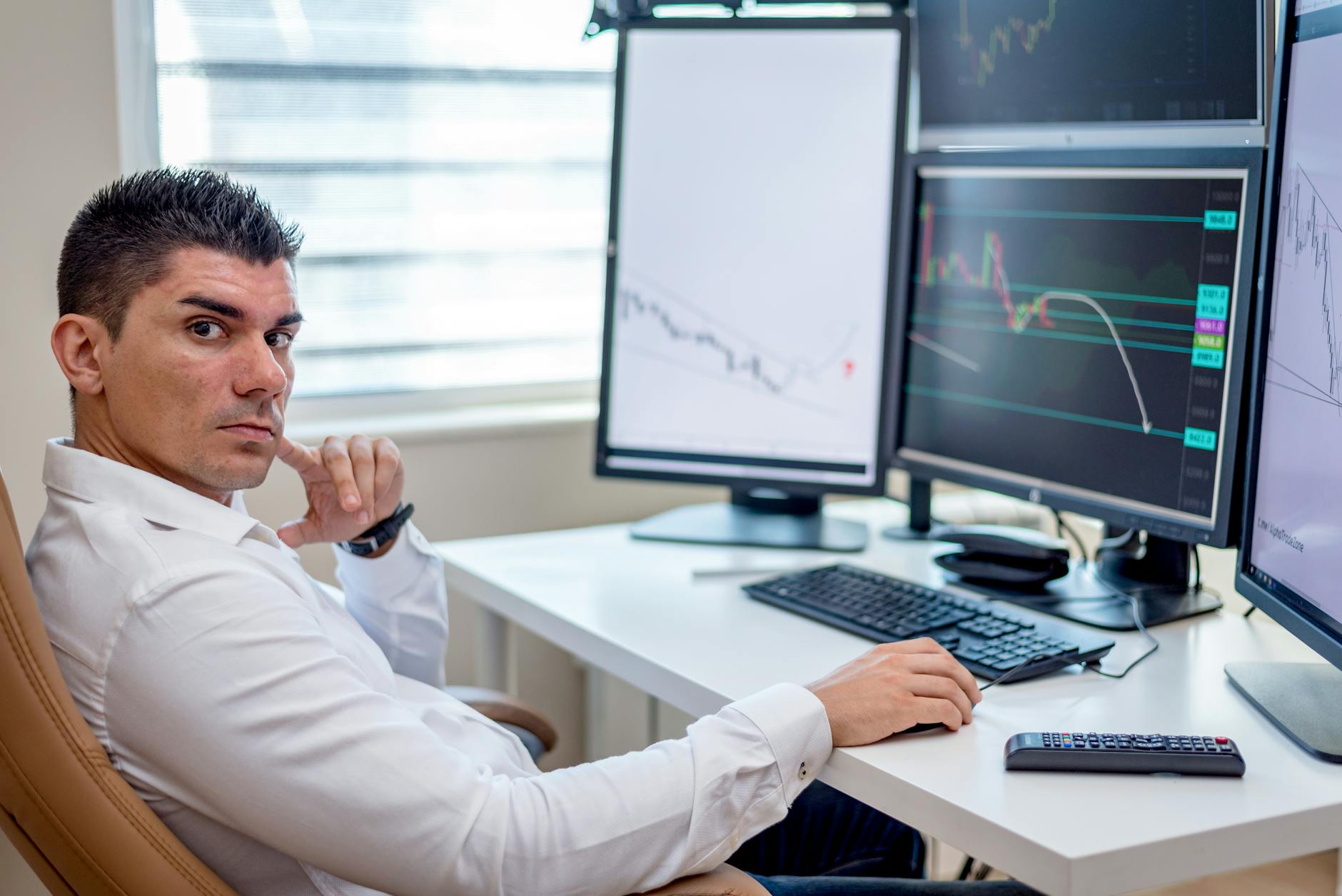
Photo by AlphaTradeZone on Pexels
Head of risk hiring in Australian iGaming has intensified over the past two years, and operators report it is now one of the most difficult senior roles to fill. The position sits at the crossroads of trading expertise, regulatory compliance, and data analytics, and candidates who combine all three are genuinely scarce. This article looks at what the role actually requires, how the talent pool stacks up, and what operators are doing to close the gap.
Why the role has grown more complex
The head of risk function in a wagering business has always carried weight. But the version of the job that exists in 2026 is substantially more demanding than it was five years ago. Three shifts explain most of the change.
First, same-game multis have redrawn the risk profile of every AFL and NRL match. These products generate large liabilities that are difficult to hedge, and the speed at which customers build them has put real pressure on automated risk tools. A head of risk today needs to understand how correlation adjustments work inside a pricing engine, not just manage individual bet approvals.
Second, the tightening of Australia's interactive gambling framework has pushed risk leaders closer to the compliance function. Responsible gambling obligations, including activity monitoring and mandatory intervention triggers, now sit partly inside the risk team's remit at several operators. That's a genuine expansion of scope.
Third, offshore sharp money has become more organised. Syndicates using algorithmic strategies place bets at scale across multiple operators simultaneously. Detecting and managing that exposure requires statistical fluency that a purely trading-background candidate won't always have.
What operators are actually looking for
Operators filling a head of risk vacancy in 2026 typically describe the ideal candidate in terms of three overlapping competencies. The first is trading depth: a working knowledge of odds compilation, margin management, and liability control across the markets the operator runs. This usually means at least five years in a bookmaker's trading or risk team, ideally with exposure to both fixed-odds sports and racing products.
The second competency is data literacy. Candidates who can read a bet ticker are plentiful. Candidates who can build a SQL query to interrogate their own book, or who understand how a machine-learning model flags sharp accounts, are not. Operators running proprietary pricing systems, or those integrating third-party risk tools, are increasingly treating this as a baseline requirement rather than a bonus.
The third is regulatory awareness. The head of risk is often the person who signs off on account-level decisions that touch on responsible gambling obligations. That means knowing when a suspension or limitation could intersect with harm minimisation duties, and when it can't. It's a genuinely novel part of the role, and most candidates arriving from international markets need time to come up to speed on Australian-specific requirements.
Where candidates come from
The domestic talent pool is thin. Australia has a relatively small number of licensed online wagering operators, which limits the total supply of experienced risk professionals. The largest operators, including Sportsbet, Bet365, Ladbrokes, and TAB, tend to develop risk talent in-house and retain it well. That means mid-sized and challenger operators are often competing for a small group of people who are already working at a competitor.
International recruitment is common, particularly from the UK. British candidates bring strong trading and risk management backgrounds from a large and mature wagering market. The regulatory differences are manageable, though it takes most candidates three to six months to internalise the Australian-specific compliance environment. New Zealand, South Africa, and Ireland also produce candidates with relevant backgrounds.
The other supply source is adjacent roles within existing teams. Operators report success promoting analysts or senior traders into head of risk positions and investing in structured development. This approach takes longer but produces candidates who already understand the operator's book and systems. As explored in coverage of how Australian operators are building their iGaming teams, internal mobility is increasingly a strategic lever rather than a fallback.
Salary and structure
Head of risk roles in Australian iGaming are typically remunerated between $160,000 and $220,000 total package, depending on the size of the operator and the scope of the role. Senior positions at the largest operators, where the head of risk oversees a team of traders and analysts, can sit above that range. Most roles carry a short-term incentive component tied to gross margin performance or loss-from-sharps metrics.
The reporting line varies. At some operators the head of risk reports to the chief commercial officer. At others, particularly those where responsible gambling monitoring has become central to the function, the reporting line runs to the chief compliance officer. A smaller number of operators have positioned risk as a standalone function reporting directly to the CEO. Where the role sits in the org chart signals a lot about how the business thinks about the trade-off between liability management and customer activity.
The skills gap that keeps coming up
Recruiters and operators consistently name the same gap: candidates who understand both the commercial side of risk management and the technology infrastructure that supports it. Knowing that a customer's account looks sharp is one thing. Knowing how to configure the flagging rules in a risk platform, and how to validate that those rules are firing correctly, is another skill set entirely.
This matters more as operators integrate third-party risk and trading services. A head of risk who can't engage technically with a vendor's product team will struggle to get the most from those partnerships. The same technical fluency that operators seek in product leadership is now expected from risk leaders too, even if the domain expertise differs.
Some operators have responded by splitting the function. A senior trading manager handles day-to-day liability and account decisions, while a risk analytics lead owns the data infrastructure and model governance. The head of risk then coordinates both. It's a workable structure, but it adds headcount and requires a head of risk who can operate effectively as a people leader rather than a practitioner.
What makes a search succeed
Operators who hire successfully for this role tend to do a few things differently. They write job descriptions that are specific about systems exposure, not just trading experience. They involve the trading team in interviews rather than leaving the decision to HR and the hiring manager alone. And they're willing to wait. The average search for a head of risk at an Australian online wagering operator runs four to five months, and operators who rush the timeline typically end up making compromises they regret.
Specialist iGaming recruiters with market-specific networks outperform generalist agencies on this search almost every time. The candidate pool is small enough that warm relationships matter more than job board reach. Operators who treat this as a confidential search, particularly when replacing an incumbent, also tend to get better candidate quality because discretion signals professionalism to people who are already employed.
The role will keep getting harder to fill as the function expands. Operators who invest in developing risk talent from within their existing analyst and trading teams are building a meaningful advantage.