What makes a great video game soundtrack
A great video game soundtrack doesn't just fill silence. The best scores are designed around interactivity in ways film and TV music never has to be, and those constraints produce something genuinely distinct.

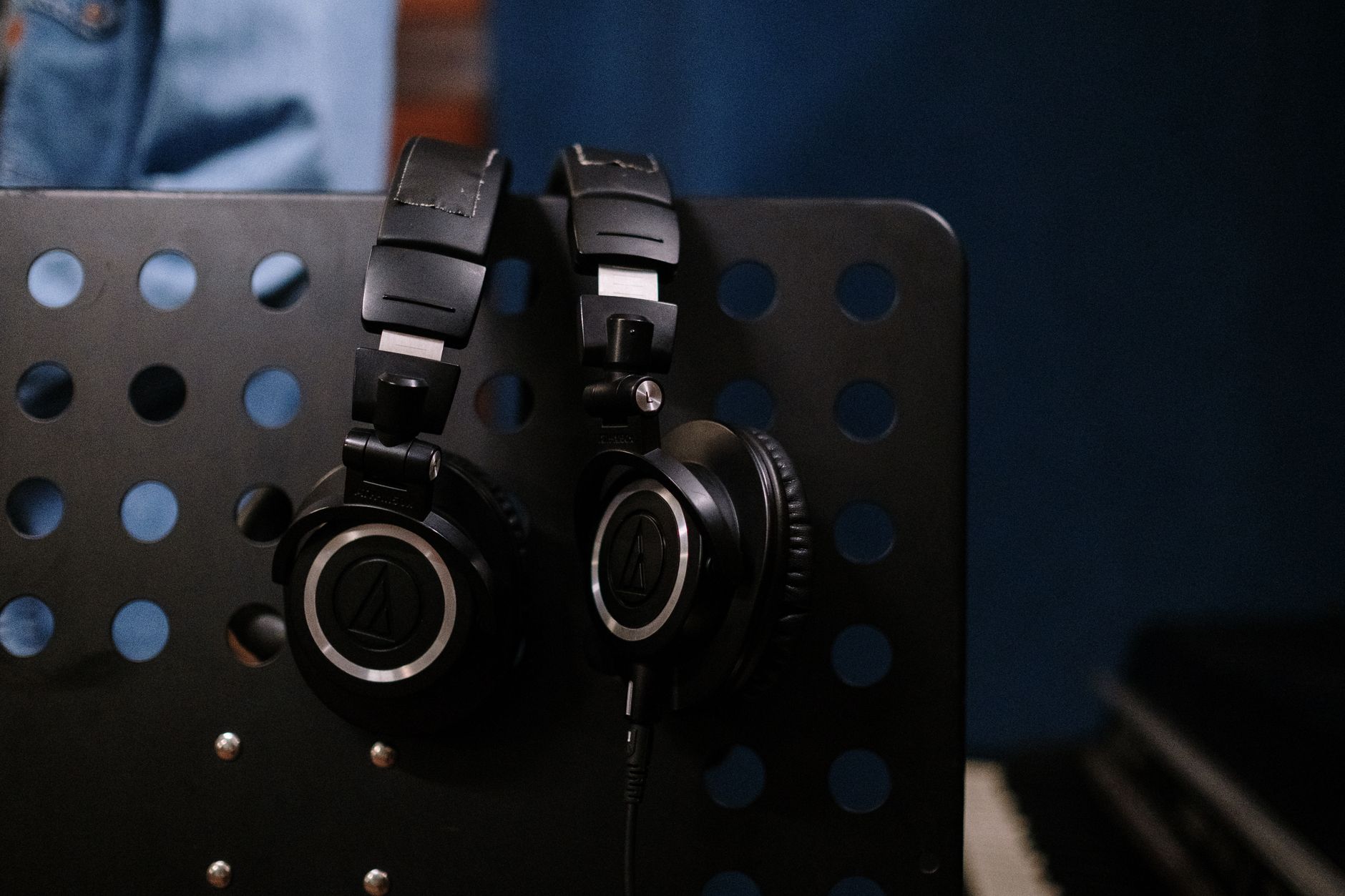
Photo by cottonbro studio on Pexels
A video game soundtrack has to do something no other musical medium demands: it has to loop without annoying you, respond to what you're doing, and sit quietly enough that you can focus while still shaping how you feel. That's an unusual brief, and the composers who get it right deserve more credit than they typically receive.
Why interactivity changes everything
Film composers write to picture. Every cue has a fixed duration, a fixed emotional arc, a fixed ending. Game composers don't have that luxury. A player might spend 45 minutes in a single area, or they might rush through in 90 seconds. The music has to work for both scenarios.
This is why the best game soundtracks are built around loops rather than linear compositions. Yoko Shimomura's work on Kingdom Hearts or Yasunori Mitsuda's score for Chrono Trigger demonstrate how a short loop can feel expansive rather than repetitive. The trick is usually harmonic movement: the loop ends on a chord that makes you want to hear it again, rather than landing on a full resolution that tells your ear "we're done." It's a structural problem, and solving it cleanly is a skill entirely separate from writing a good melody.
Adaptive music takes this further. Red Dead Redemption 2's score layers instruments dynamically as you move from exploration to combat to chase. The melody doesn't change, but the texture does, tracking your situation without a jarring cut. That responsiveness is what separates a truly interactive score from a playlist of themed tracks.
Silence is part of the composition
The best game composers know when to stop. Breath of the Wild is the obvious example: long stretches of open field with almost no music at all, just ambient wind and birdsong, punctuated by a single piano motif when you crest a hill. The silence makes those moments land harder because you've been in an acoustically sparse world for the past twenty minutes.
This is counter-intuitive from a production standpoint. Publishers sometimes push for more music, more coverage, more presence. The composers who push back on that instinct tend to produce scores that players remember for years. Emptiness isn't a gap. It's a choice.
Compare that to the dense orchestral saturation of some mid-2000s blockbusters, where every corridor had a full string section and the constant musical pressure became fatiguing within an hour. Good game music knows that the player's ear needs rest, the same way good level design knows the player's attention needs contrast.
Leitmotifs and emotional memory
The strongest game scores use leitmotifs, recurring musical themes attached to characters, places, or ideas, so that by the time the theme plays in its final context, players have weeks of emotional history with it. This is where games outperform any other medium: the association is built through personal experience, not passive viewing.
Nobuo Uematsu's work across the early Final Fantasy titles set the standard for this. Aerith's theme in Final Fantasy VII is not objectively the most complex piece of music ever written. But players who spent 40 hours with that character before the score's most devastating deployment will tell you it's one of the most affecting things they've heard in any medium. The music didn't create that feeling alone. It activated the memory the player built.
This is why the conversation about what makes a great video game villain almost always circles back to music. A villain theme that tracks through the game, mutating as the player learns more, can reframe every earlier appearance in retrospect. The score becomes a kind of dramatic irony the player only catches on a second playthrough.
Genre fit matters more than production quality
A high production budget doesn't guarantee a better soundtrack. Some of the most effective game scores are built from chiptune or lo-fi synthesis, and they work precisely because the sound matches the game's aesthetic register.
Undertale's score by Toby Fox was composed in a tracker program on a modest setup. It's memorable not despite those constraints but partly because of them. The limited palette creates cohesion, and cohesion is what lets a leitmotif land. When every track in a game shares a sonic DNA, the callbacks register clearly.
The same principle applies to horror. A fully orchestrated horror score can work, but the unsettling granularity of synthesised sound often creates more unease than a live string section. The Silent Hill series built its identity on Akira Yamaoka's industrial noise and guitar work because that sonic palette signalled wrongness in a way that traditional orchestration wouldn't. Understanding what makes a great video game boss fight is partly a question of sound design: the audio signature of a boss encounter tells the player something is different before the gameplay confirms it.
What separates good from great
Three things tend to separate good game music from great game music. First, intentionality: every track exists for a specific reason in a specific context, not as generic background texture. Second, restraint: the score doesn't compete with the gameplay or the dialogue for attention. Third, coherence: the musical world of the game feels like a single designed thing, not a collection of separately commissioned pieces.
The last point is underappreciated. When a game ships with music from five different composers and no strong creative direction, the result is often technically competent and emotionally inert. Players notice dissonance between the sound of one area and the next even when they can't articulate why. Coherence is the thing that makes a score feel like it belongs to the game rather than licensed to it.
Game music criticism is still maturing as a field. Players rate it, speedrunners mute it, and composers rarely get the credit they earn. But the number of people who return to game soundtracks outside the game, on headphones on the commute, is the clearest evidence that the medium's best scores are doing something more than filling silence.